
This post contains affiliate links and we may earn a commission when you click on the links at no additional cost to you. As an Amazon Affiliate, we earn from qualifying purchases.
Hands-on, child-led tools you can easily bring into your home
Montessori learning is all about meeting your child where they are and giving them meaningful, self-directed work. If you’re homeschooling a preschool or kindergarten child, you don’t need to recreate a full Montessori classroom—just a few thoughtful materials can make a big impact.
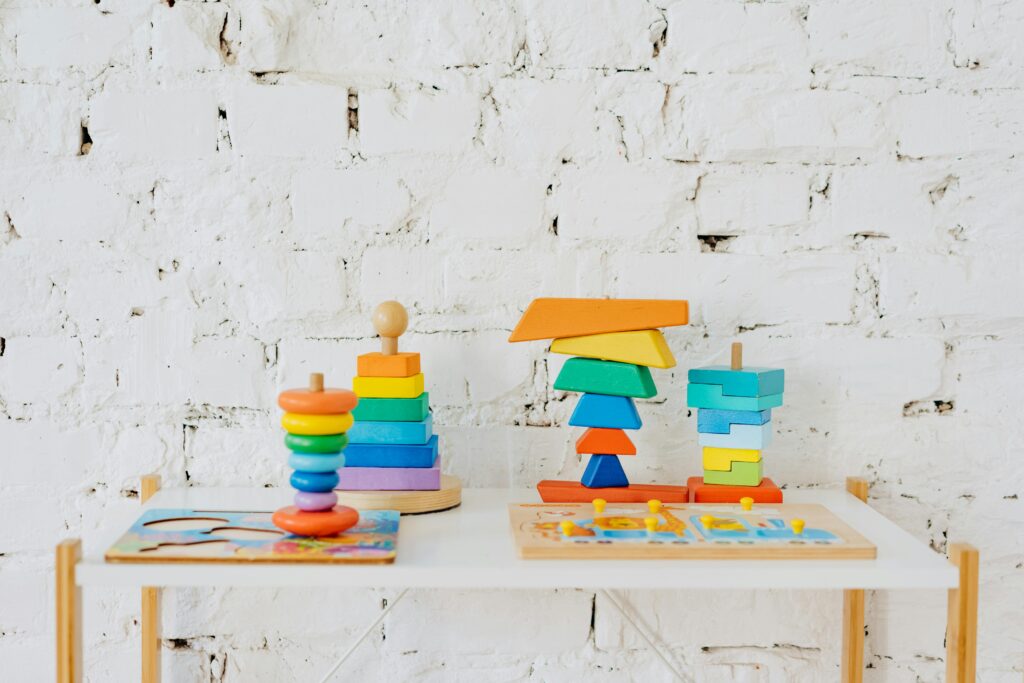
Here are some of the best Montessori resources available on Amazon to bring structure, beauty, and purpose into your home learning space:
Montessori Moveable Alphabet
The moveable alphabet is a cornerstone of Montessori language learning. Kids use it to build words before they can physically write them, allowing them to explore phonics, spelling, and storytelling in a tactile, empowering way. A high-quality set will include wooden or plastic lowercase letters in red and blue (vowels in one color, consonants in the other).
What it builds: Letter recognition, phonemic awareness, spelling
Sandpaper Letters and Numbers
These textured cards allow children to trace letters and numbers with their fingers, engaging both the visual and tactile senses. The motion mimics proper handwriting strokes, laying the groundwork for writing before pencil grip is fully developed. Montessori guides typically introduce lowercase letters first, one phonetic sound at a time.
What it builds: Handwriting readiness, muscle memory, letter-sound associations
Montessori Cylinder Blocks (Knobbed Cylinders)
These iconic wooden blocks are deceptively simple but deeply educational. Each block contains cylinders of varying height and width that children must fit into matching sockets. They’re not only fun to explore, but they also train the eyes and hands to notice gradation, size, and spatial differences.
What it builds: Fine motor control, visual discrimination, concentration
Practical Life Tools (Child-Sized)
One of the most beautiful aspects of Montessori is how it invites children into real-life tasks. A child-sized broom, mop, or dishwashing station lets your child take part in daily life with pride and purpose. Montessori practical life activities develop coordination, sequencing, and independence.
What it builds: Confidence, motor skills, life skills
Montessori Pink Tower and Brown Stair
These beautiful wooden blocks are designed for sensorial exploration, helping children understand concepts of size, gradation, balance, and order. The pink tower uses ten cubes increasing in size, while the brown stair uses rectangular prisms. Children naturally build, balance, and arrange them—making abstract math concepts concrete.
What it builds: Visual-spatial reasoning, comparison, coordination
Montessori Hundred Board
The Hundred Board is a math material that allows children to explore number order and patterns by placing number tiles from 1 to 100 in sequence. It’s a hands-on introduction to number sense, skip counting, and pattern recognition. Many sets come with wooden tiles and a grid board.
What it builds: Number recognition, sequencing, pattern awareness
Montessori Shades of Color Tablets
This elegant material includes color tablets in a wide variety of hues—each color represented in a gradient of 7 to 9 shades. Children learn to sort and grade colors from lightest to darkest, strengthening visual perception and attention to detail.
This set also encourages focus and patience as children compare, match, and refine their ability to distinguish between subtle changes in tone. It’s not only beautiful to look at but also builds the foundational skills needed for art, science, and sensory integration.
What it builds: Visual discrimination, concentration, pre-reading skills (left-to-right sequencing), and early art appreciation
Home tip: You can extend this activity by inviting your child to find matching shades in nature, fabric swatches, or even paint chips from the hardware store!
Bonus: Montessori Books for Parents
The Montessori Toddler by Simone Davies
Montessori from the Start by Paula Polk Lillard
These parent-friendly books offer practical tips for bringing Montessori into everyday life—from setting up your environment to supporting independence, even with young toddlers and preschoolers. They’re great resources to have on your shelf as you get started.
What they offer: Philosophy, routines, practical implementation
Final Thoughts
You don’t need a full shelf of materials to provide a beautiful, effective Montessori homeschool experience. Start with a few versatile tools and follow your child’s curiosity. Watch how they engage deeply, build independence, and grow in confidence—all through meaningful work that respects who they are.